Online applications closed at 5PM ET on September 9, 2026.
If you have any questions or for more information, contact Phil Vos.
Discover Careers in Renewable Natural Gas
Attend* RNG WORKS 2026 in Milwaukee and learn more about the opportunities in one of North America's growing clean energy industries.
*As part of our commitment to strengthening the workforce pipeline, RNG COALITION is pleased to offer a limited number of complimentary tickets to select invited students.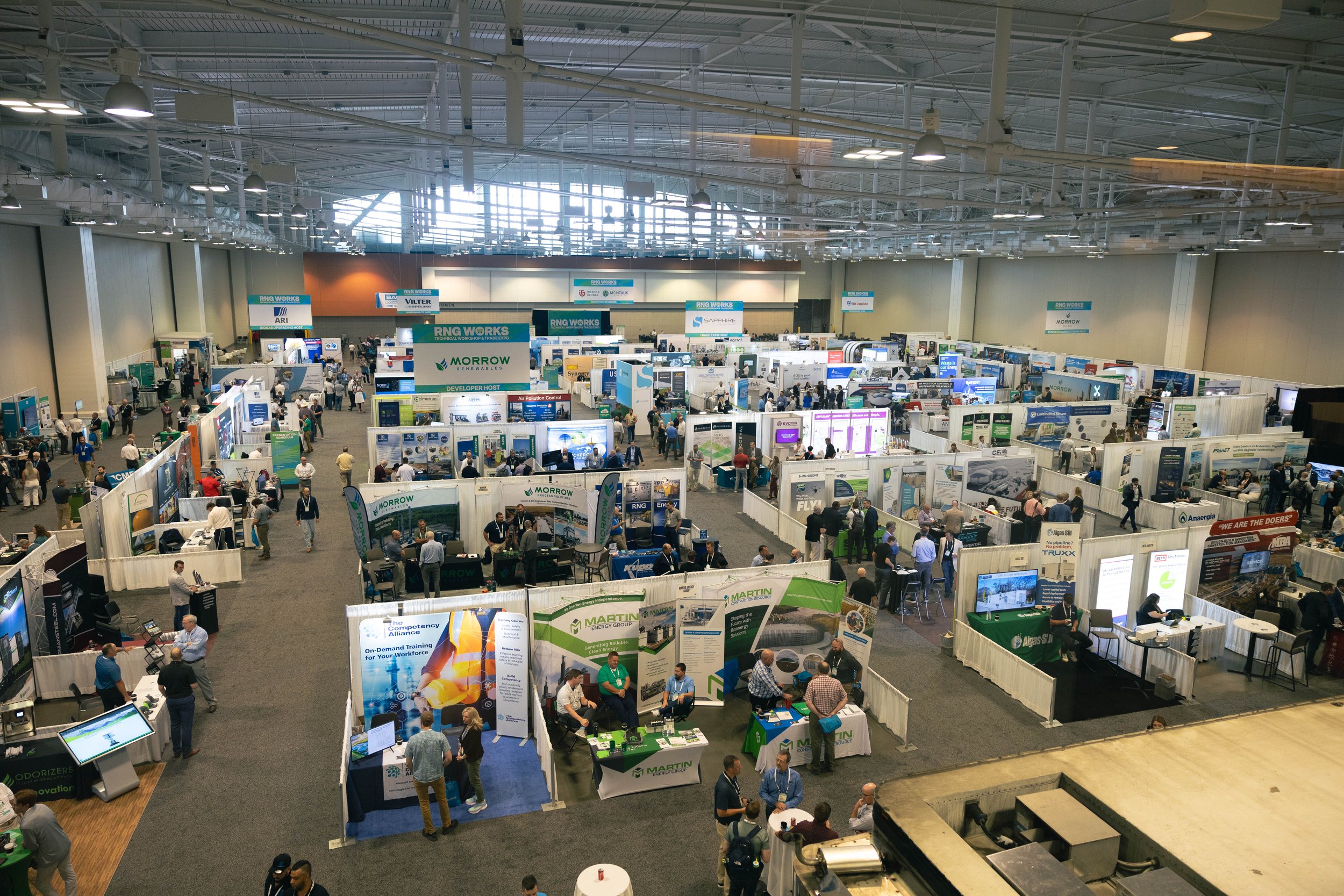
Why Attend RNG WORKS?
Meet Industry Leaders
Connect with companies developing and operating RNG projects across North America.
Explore Career Paths
Learn about technical, engineering, operations, construction, and environmental careers.
Build Your Network
Engage directly with organizations looking for skilled professionals.
About Renewable Natural Gas (RNG)
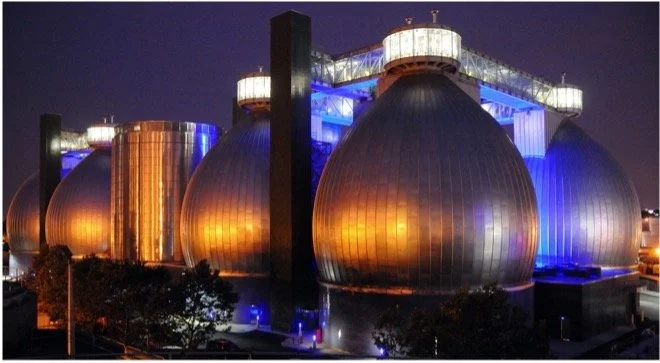
Anaerobic digesters at wastewater treatment plant, Brooklyn, NYRenewable Natural Gas (RNG, often “biomethane” outside the U.S.) is produced from the “biogas” that is released by organic material decomposing in oxygen-free conditions (“anaerobic digestion”). This includes everyday waste streams like food waste (including in landfills), sewage, and livestock manure. Landfills are their own “anaerobic digesters”; for other waste streams digesters must be built, and may take the form of complex climate-controlled tanks, or (for livestock farms) in-ground tanks/tunnels or covered manure lagoons.
Biogas is a mixture of carbon dioxide (CO2) and methane (CH4). Filtration removes CO2 and trace constituents, “upgrading” the biogas to RNG that is 95+% methane, meets quality standards for pipeline injection or use as a transportation fuel, and is a low-carbon or even carbon-negative alternative to conventional (fossil) natural gas.¹
1 A fuel is considered “carbon-negative” when its production prevents more emissions than come from using it. What’s the Difference Between RNG and Conventional Natural Gas?
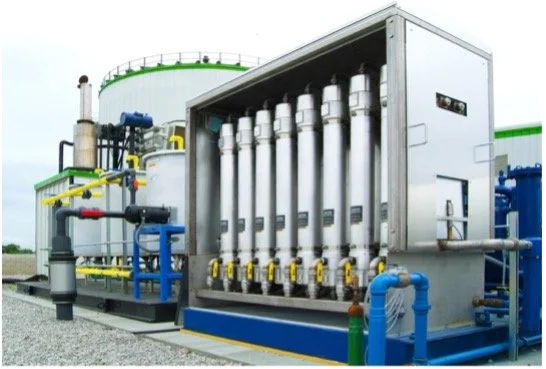
Biogas upgrading equipmentRNG captures methane—a potent greenhouse gas (GHG)—emitted by the decomposition of organic wastes produced by everyday human activity. Capturing methane keeps it from escaping into the atmosphere, where it is estimated to trap heat 80x more effectively than CO2, significantly contributing to climate change.²
Conventional gas is collected from limited fossil resources that would otherwise be sequestered deep underground. In short, RNG captures methane that is already in the environment, while conventional gas adds methane to the environment.
2 Intergovernmental Panel on Climate Change (IPCC), 2021. Climate Change 2021: The Physical Science Basis, page 1017.Where is RNG Used?
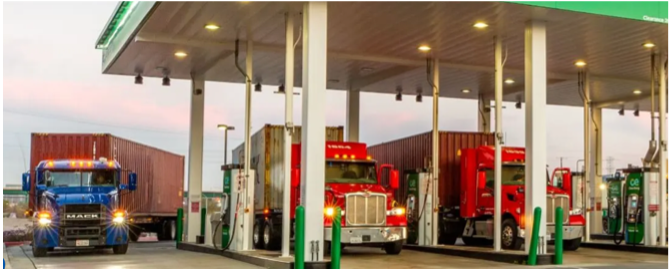
RNG is a flexible renewable energy resource used as a transportation fuel, in thermal applications, and to generate electricity; it’s also a feedstock for renewable hydrogen. RNG is most commonly used as a fuel in heavy-duty on-road vehicles, supported by credits available under the federal Renewable Fuel Standard and low-carbon-fuel standards in multiple states.³
RNG is a drop-in replacement for conventional gas, providing a decarbonization pathway wherever natural gas is used. Like conventional gas, it can be delivered by pipeline or tanker truck.
3 Including CA, HI, NM, OR, WARNG Industry Growth
In 2012, there were 31 operational RNG projects in North America, mostly at landfills. As of summer 2026, there are over 600 operational facilities at livestock farms (343), landfills (175), treating food waste (43) and at wastewater treatment plants (41). 450 more facilities are under construction or in planning. Total operational production capacity is currently estimated to be nearly 200 billion cubic feet per year.⁴
The top 10 states for RNG projects are (alphabetically) CA, IA, MI, NY, NC, OH, PA, SD, TX and WI.
4 RNG COALITION project and facility databaseRNG COALITION and the RNG Industry
RNG COALITION is the premier trade association exclusively representing the renewable natural gas industry in the U.S. and Canada. Much of our work is focused on policy and regulatory advocacy at both the federal and state/provincial levels. We also provide public and member education, host multiple events each year, participate in energy forums, provide data and research support and are engaged in development of new markets.
RNG COALITION has over 260 member companies that span the entire RNG value chain. This includes project developers, engineering and construction firms, technology providers, marketers and traders, fuel dispensers, midstream transportation providers, utilities, consultants, law firms, accountants and academia.
Jobs in the RNG Industry
Renewable natural gas projects typically go through three phases: project development (including site identification, negotiation, planning, permitting, fund raising), project construction and facility operation. Each phase calls for different skills, with some overlap. Business skills including accounting, and a problem-solving orientation, are useful throughout the project cycle.
-
![]()
Project Development
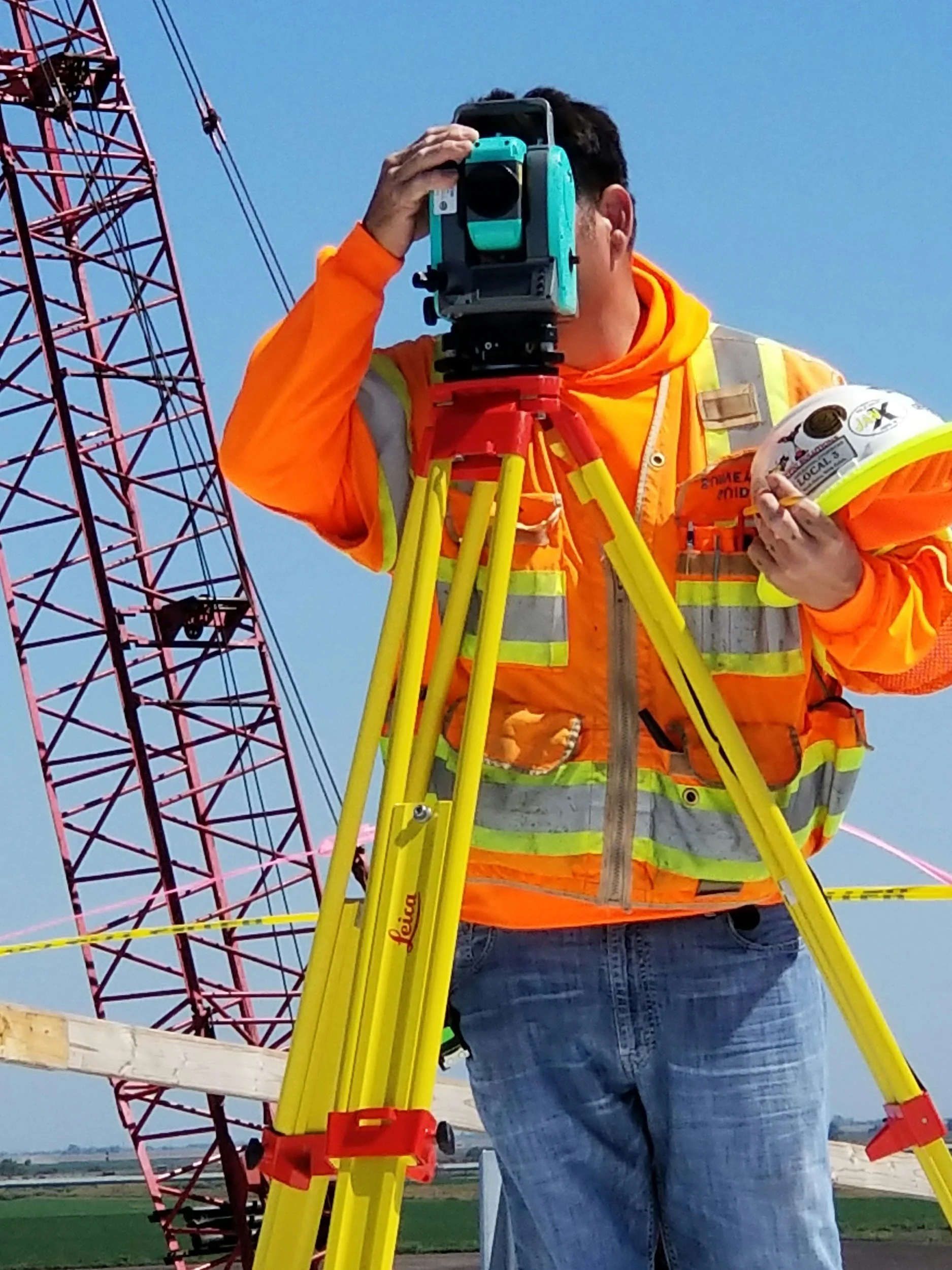
Including project managers; environmental consultants; civil, environmental, mechanical, and process engineers; geotechnical engineers; CAD technicians; financial analysts; project finance specialists; surveyors; regulatory affairs specialists; permitting specialists.
-
![]()
Project Construction
Including CAD technicians; fabrication technicians; construction managers; pipefitters (including HDPE fusion); welders; electricians; heavy equipment operators; instrumentation/ controls technicians; concrete finishers; boilermakers; supply chain coordinators.
-
![]()
Facility Operations
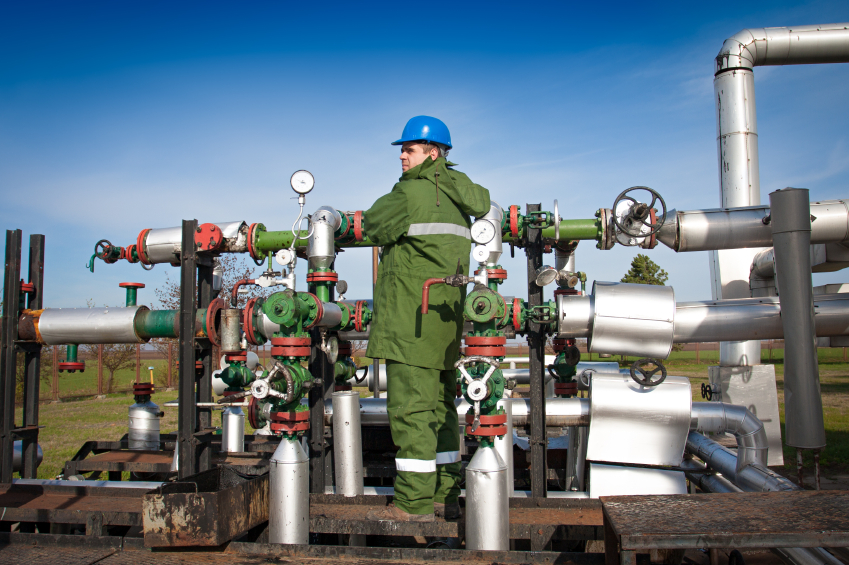
Including plant superintendents; plant operators/technicians; gas quality analysts/ lab technicians; data analysts; maintenance technicians (mechanical and electrical); organic- and biochemists; instrumentation/controls technicians; remote operations managers; SCADA/controls engineers; environmental compliance officers; safety officers (H2S, CH4 hazard management); truck drivers.